Hol dir jetzt deine Karte


Iceland

Maja Jarecka
December 10, 2025

Jiri sedlacek
December 10, 2025
Christmas in Iceland is unlike Christmas anywhere else. It is part ancient folklore, part Christian holiday, part winter-survival celebration — and completely its own thing. In a country where December days are short and nights stretch long and dark, Icelanders have shaped Christmas into a season of light, warmth, storytelling, and magic.
This is the true story of how Icelanders celebrate Christmas: from its ancient origins to the traditions families still keep today.
The Icelandic word for Christmas, “Jól,” comes from the old Norse Yule celebration — a midwinter festival held long before Christianity reached the island. In the ancient Icelandic calendar, a new day began at sunset, not midnight, and the darkest weeks of winter were filled with fires, feasting, and storytelling to keep spirits high during the long cold.
When Christianity took root in Iceland in the year 1000, the old Yule blended naturally with the Christian Christmas holiday. The result is the modern Icelandic Christmas: a gentle mix of old pagan winter traditions and newer religious customs.
One of Iceland’s most charming — and sometimes strange — Christmas traditions comes from its rich folklore.
Instead of one Santa Claus, Iceland has thirteen Santa-like figures.
They are mischievous brothers who live in the mountains and come down, one per night, beginning December 12.
Children place a shoe on their windowsill.
Each Yule Lad has his own personality and habits, like Door-Slammer, Sausage-Stealer, Spoon-Licker, and more. It’s silly, spooky, and magical — exactly how Icelandic folklore has always been.
Looming behind the Yule Lads is a far more intimidating character: the giant Yule Cat.
The legend says the Yule Cat will come on Christmas Eve and eat anyone who does not receive new clothes for Christmas.
The meaning wasn’t fashion — it was motivation. Historically, everyone worked hard during autumn to finish weaving or knitting. New clothes meant you had done your share of the seasonal chores. No clothes meant… well… cat food.
This blend of magic, caution, humor, and tradition is at the heart of Icelandic Christmas.
In Iceland, Christmas is not just a date — it is a season.
Families often gather to make laufabrauð, a thin, circular fried bread decorated with delicate hand-cut patterns. Cutting the designs is almost a meditative art, passed down through generations.
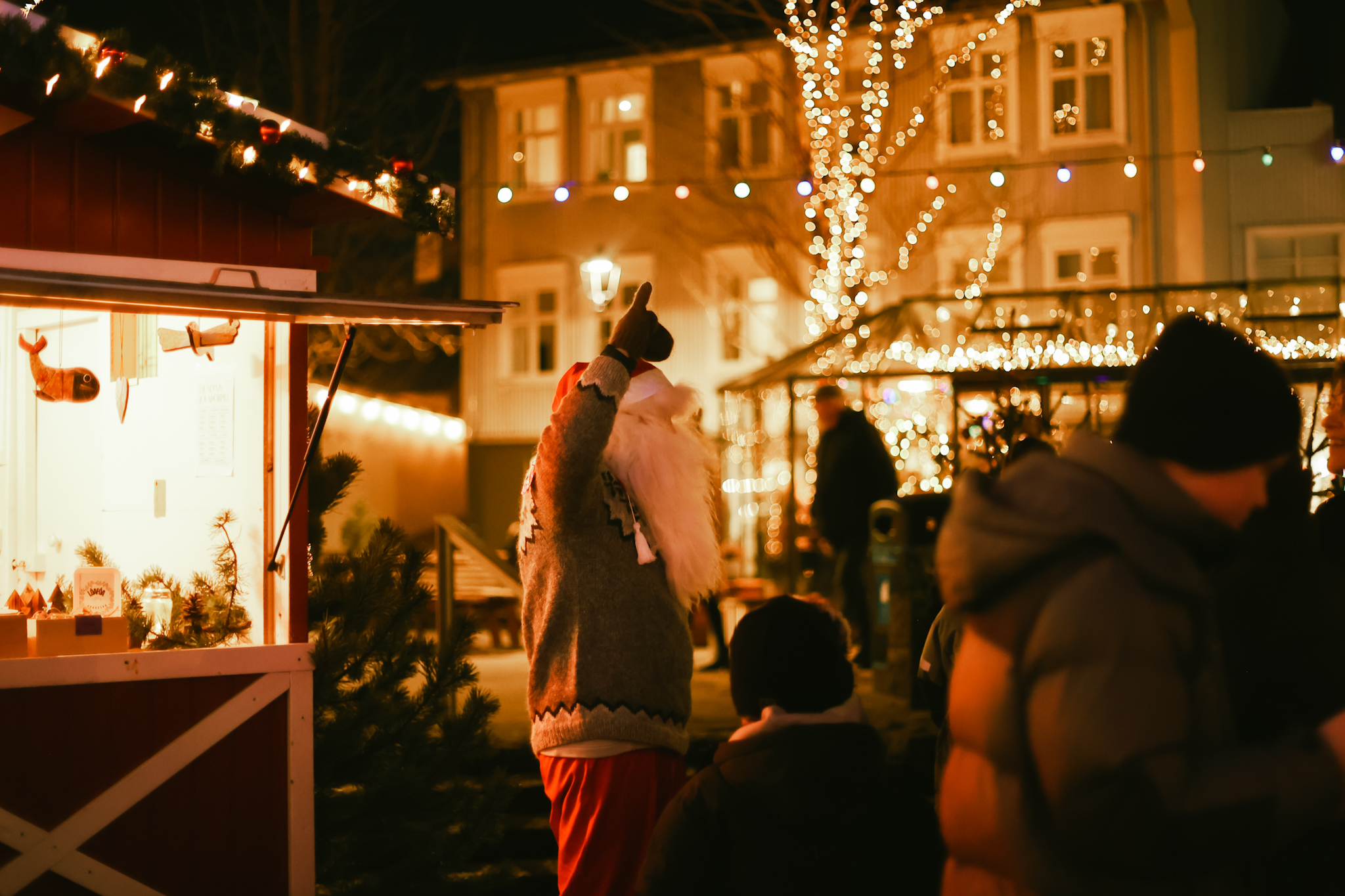
With daylight lasting only a few hours in December, houses glow with candles and lights. Streets twinkle. The country feels expectant — peaceful, snowy, and bright despite the winter dark.
The day before Christmas Eve is Þorláksmessa, named after Iceland’s patron saint.
It’s a lively, slightly chaotic, very Icelandic evening.
The true celebration begins at sunset on December 24.
This is the moment Christmas officially starts according to old Icelandic tradition.
Families gather for dinner, often serving:
The house smells warm and smoky, with candles glowing in windows against the winter night.
After dinner, families exchange gifts.
Many — almost every home — will receive books.
This leads to one of Iceland’s most beloved traditions.
Icelanders love books deeply, and Christmas is their biggest reading festival.
Every November, a catalog of all newly published Icelandic books is delivered, free, to every household. Families browse it, choose books for each other, and buy them for Christmas Eve.
On the night of December 24, after gifts are opened, the house usually becomes quiet, warm, and cozy.
People curl up in blankets.
They eat chocolate.
They drink hot cocoa.
And they read.
It is peaceful, gentle, and one of the most cherished parts of Icelandic Christmas. The tradition dates back to World War II, when paper was one of the few things Iceland could import — so books became the perfect gift.
December 25 and 26 are calm days.
Families stay home, visit relatives, eat leftovers, play games, read more, or simply rest. The streets are quiet. The whole country seems to breathe out a long, peaceful sigh.
Even after the 26th, the Christmas season stretches on. Decorations stay up until January 6, the traditional end of the Icelandic holiday period.
By then, the last Yule Lads have gone back to the mountains, the Yule Cat has retreated to wherever giant cats come from, and Iceland slowly moves forward into the new year.
If you ask Icelanders what makes their Christmas unique, the answers are simple and warm:
Christmas in Iceland isn’t loud or extravagant. It’s quiet, magical, cozy, and rooted in centuries of tradition.
It’s a celebration of warmth in the cold, and light in the darkness — something Icelanders have always needed, and always cherished.



© 2024 Campsire.com
v.1.4
.png)